
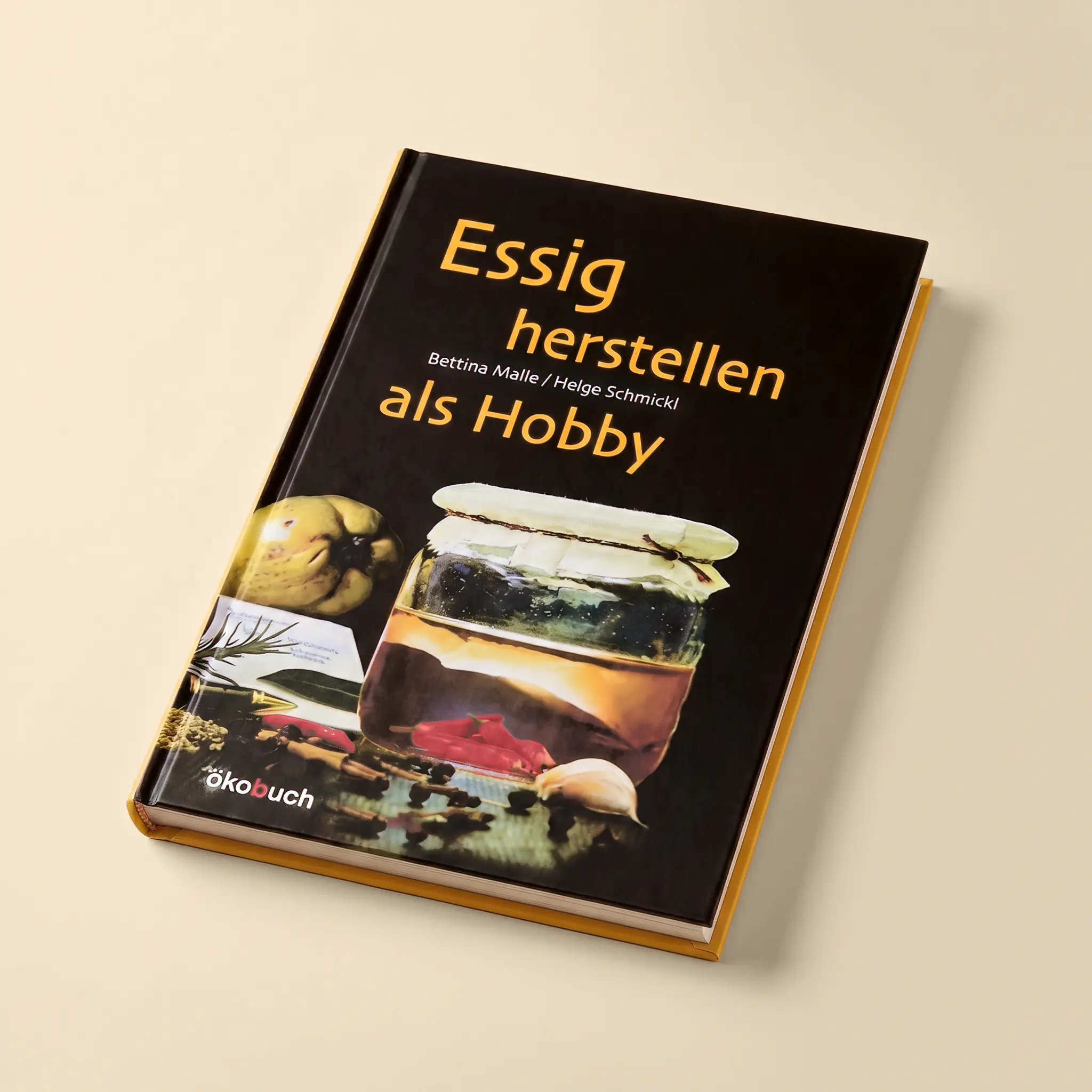
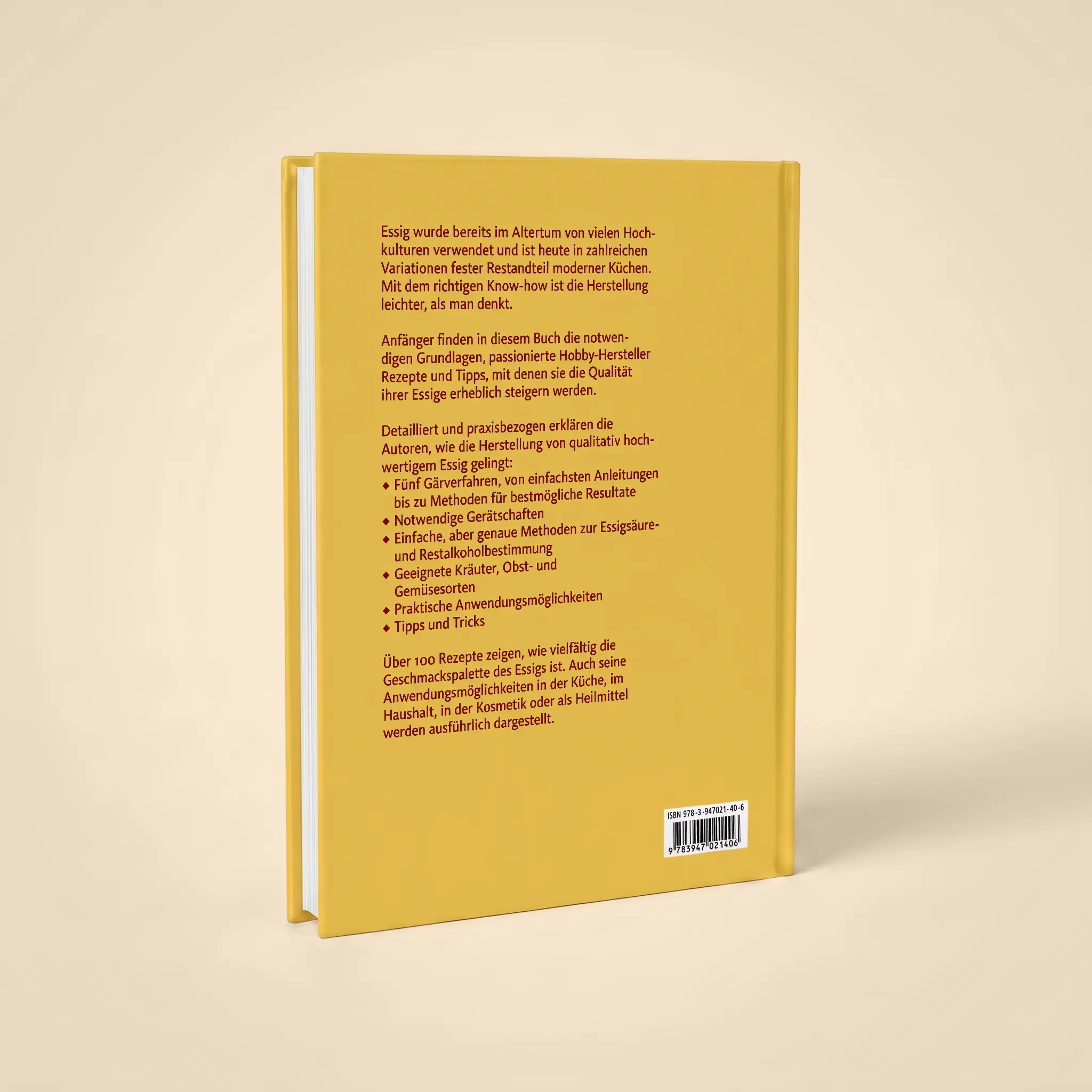


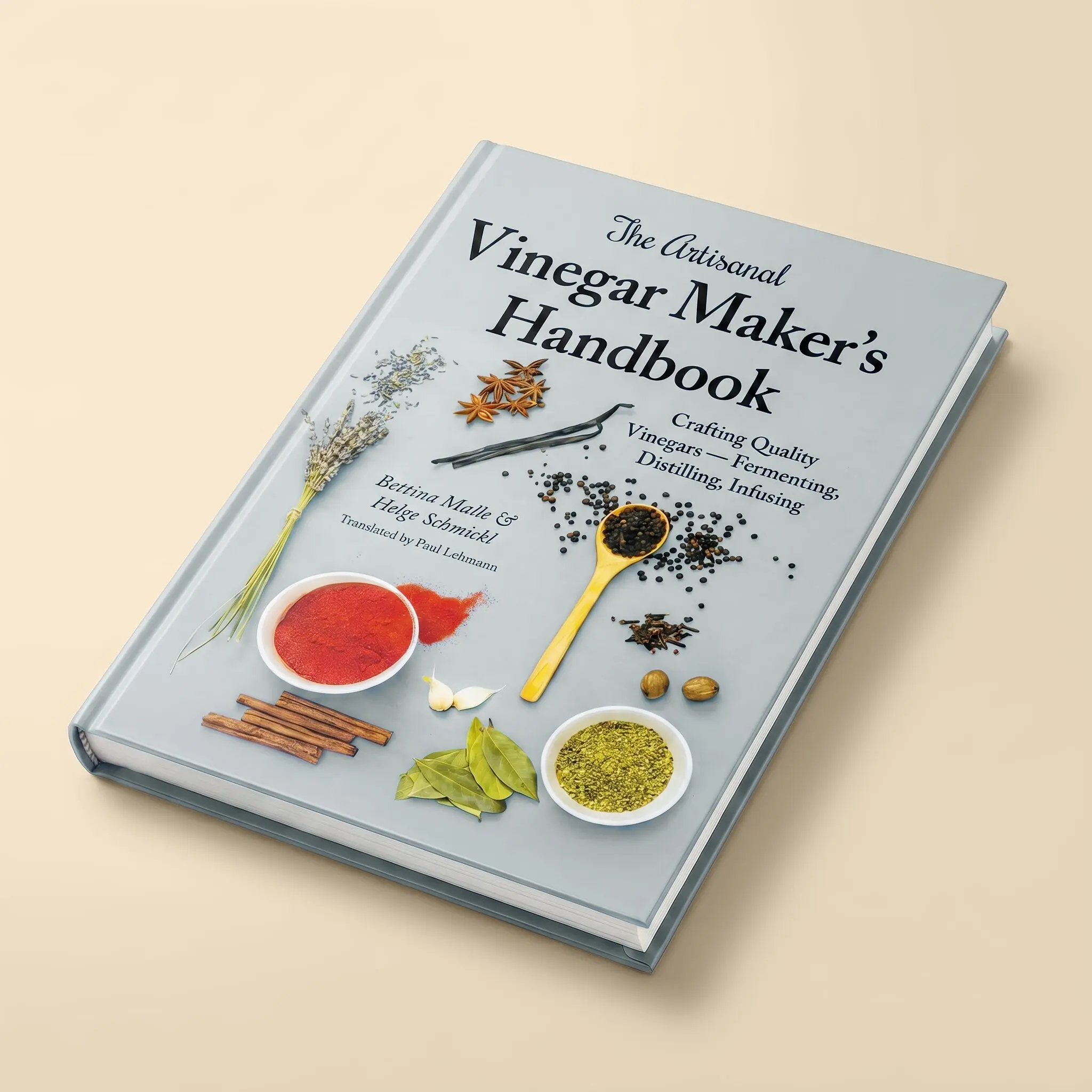
Essigherstellung als Hobby (Vinegar Production as a Hobby) – the Practical Guide in German by Bettina Malle and Helge Schmickl is an accessible, practice-oriented standard reference for everyone who wants to produce vinegar themselves. The book accompanies you step by step from the preparation of the mash or fermentation wine, through acetic fermentation, to the analysis, further treatment, storage and application of the finished vinegar.
Particularly valuable is its clear practical focus: you will not only learn how vinegar is produced, but also what role alcoholic fermentation, acetic acid bacteria, mother of vinegar, fermentation temperature, aeration and the right vinegar fermenter play in achieving a high-quality result.
What you can expect inside
- Fundamentals of vinegar production with a clear explanation of the chemical and microbiological processes
- Preparation of a mash or fermentation wine as the basis for home-made vinegar
- Acetic fermentation in practice with the surface method and the fixed-bed method
- Mother of vinegar, active vinegar cultures and packing materials: use, propagate and store them correctly
- Vinegar fermenters and materials for functional vinegar units
- Analyses for determining acetic acid and alcohol content
- Numerous recipes for fermented vinegars, infused vinegars, balsamic vinegars and flavoured vinegars
- Applications in the kitchen, household, health and cosmetics
Practical knowledge for better results
A good vinegar starts with the quality of the raw materials. The book explains how fruit, must, wine, starch products or other raw materials are prepared and what to bear in mind during alcoholic fermentation. You will learn how a clean mash is produced, what fermentation problems can occur and how to avoid off-fermentations, kahm yeast, over-oxidation or other disturbances.
The chapter on acetic fermentation describes in detail how acetic acid bacteria work, how a mother of vinegar develops and how acetic fermentation can be started reliably. Both simple surface methods and improved methods with aeration, water bath, active vinegar culture and packing-material techniques are covered.
From the vinegar fermenter to the finished vinegar
The book shows how a vinegar fermenter should be set up sensibly from a process-engineering perspective, which materials are suitable and what to look out for when buying or building your own vinegar fermenter. Alongside classic surface methods, the fixed-bed method is also explained, in which packing materials inside the vinegar reactor play an important role.
The further treatment of the finished vinegar is also covered in detail: filtration, storage, fining, carbon treatment, bottling, pasteurisation, colouring and preservation are described in a practical way.
With many recipes and practical applications
Numerous recipes make the book a useful companion for beginners and advanced users alike. Included are instructions for apple vinegar, wine vinegar, beer vinegar, raspberry vinegar, herbal vinegar, spiced vinegar, balsamic vinegar, infused vinegar and many other variants.
In addition, the book presents various application possibilities for vinegar in the kitchen, in the household, in cosmetics and in traditional home remedies. Vinegar is thus presented not only as a food, but also as a versatile natural product.
Product details
- Authors: Bettina Malle, Helge Schmickl
- Publisher: ökobuch Verlag GmbH
- Edition: 4th edition, 2023
- Length: 208 pages
- Format: hardcover, with colour illustrations throughout
- ISBN: 978-3-947021-40-6
View the Table of Contents
Watch a preview on YouTube
Further information
To complement the book, you will find further practical content on acetic fermentation, vinegar fermenters, analysis, recipes and proper application:
- eBook – Recipe Collection for Vinegar Production: PDF for printing
- eBook – Vinegar Production for Beginners: PDF for printing
- eBook – Vinegar Production for Advanced Users: PDF for printing
- Online School: online seminars, videos
- Practical Seminar on Vinegar Production: you ferment and analyse yourself
- Calculations for Vinegar Production: help with acid, alcohol, water and starter quantities
Technical details
| Weight | 0,7635 kg |
|---|---|
| Dimensions | 25 × 18 × 2 cm |

Reviews
There are no reviews yet.